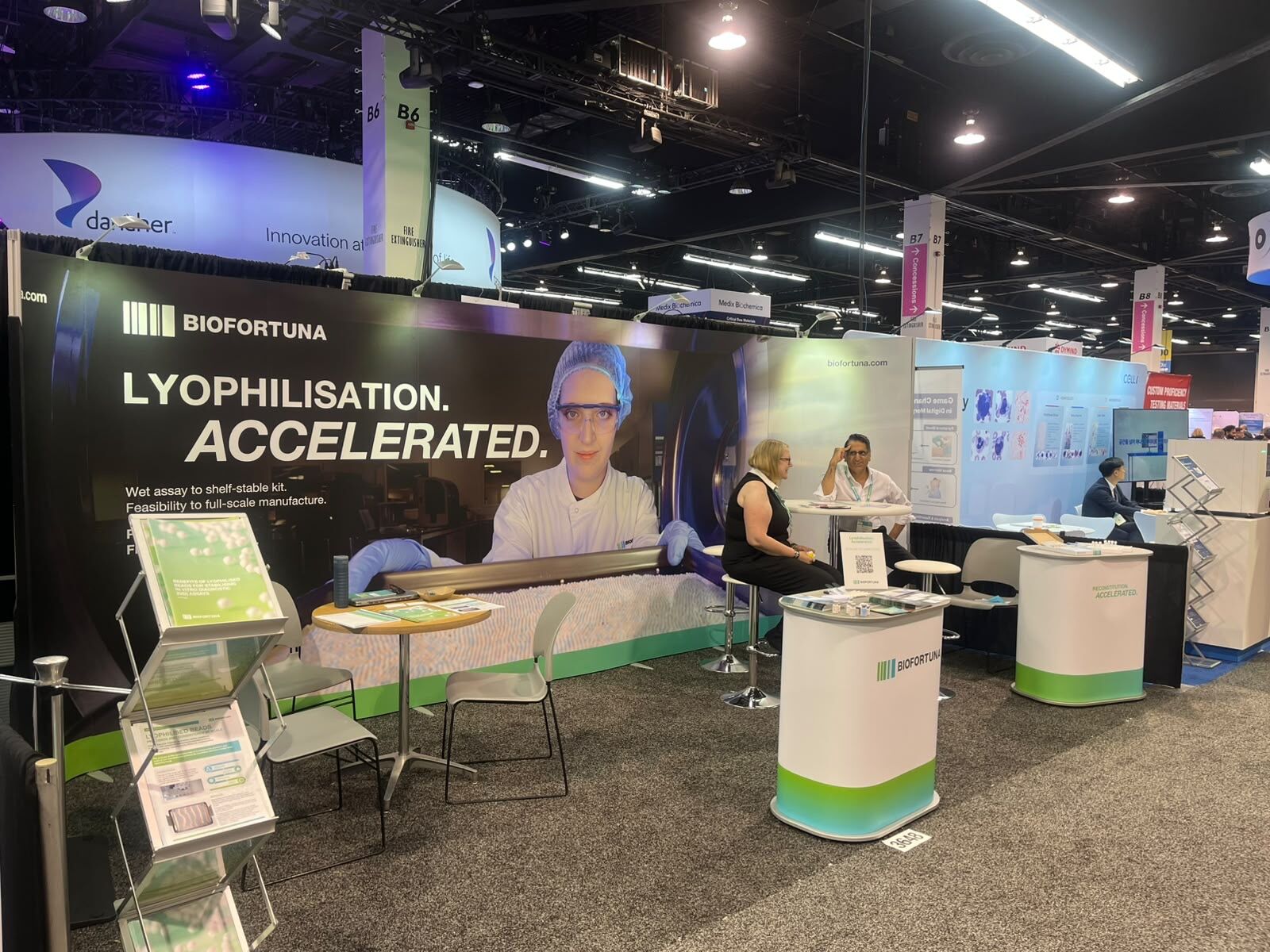
Biofortuna build lyophilisation technology, the freeze-drying process that turns diagnostic reagents into shelf-stable beads. For their next stand, they wanted one hero image to do the job a whole wall of graphics normally does: stop people walking past, then reward them once they arrived. I've photographed life sciences and pharma work for years, including as a qualified Medical Illustrator, so I understood the process and the kit before the shoot started. What I didn't have was a settled brief. What arrived instead was a thread of good questions and no firm answers, much would hang on what we found on the day.
Spending some time assessing the situation, we needed to make lots of decisions before I picked up a camera. The client wanted the tray of beads sharp enough to read as product, but also wanted the scientist's face to carry the emotional weight, normally a choice between two focal planes rather than both at once. Their moodboard showed two contradictory lighting styles and needed one clear direction instead. Nobody had settled where the scientist should sit in the frame, which mattered because the headline, "Lyophilisation accelerated," still needed somewhere to live. That headline was short enough to run large, but as yet those details had yet to be decided. And getting a camera close enough to the beads meant physically modifying a freeze dryer, with three on site to choose from and a Head of Tech who needed to know which one to prep, not a quick job. Understanding the need for flexibility on layout and design, we chose to shoot two positioning options.
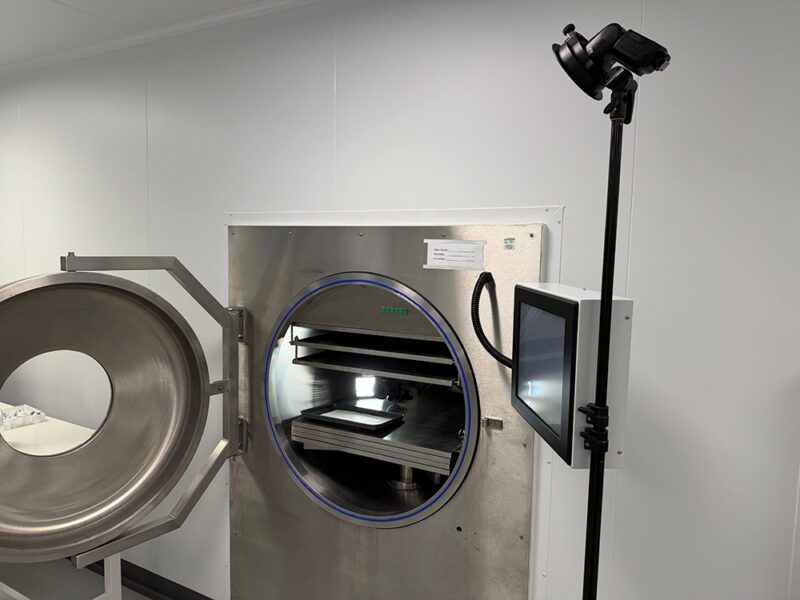
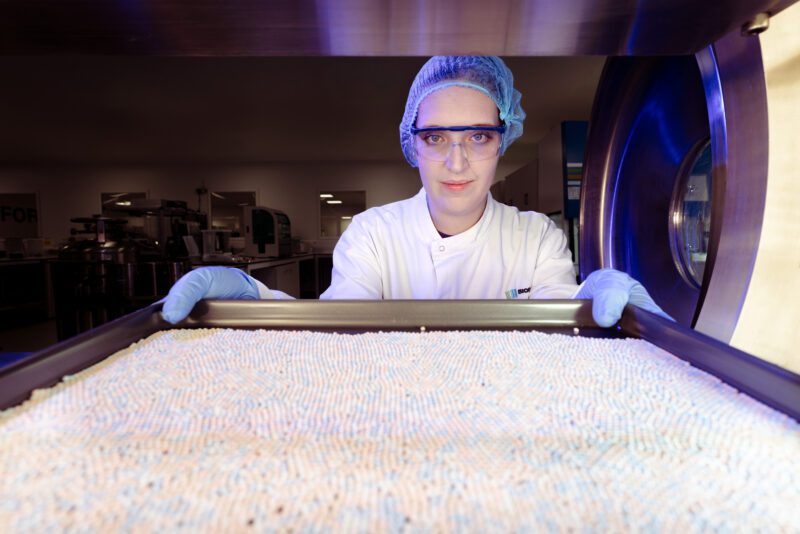
I shot from inside the freeze dryer itself, rigging the camera and flash on the same shelf as the beads and shooting back out through the open chamber door at the scientist. That position did most of the work on its own. A wide lens positioned close to the tray exaggerates the distance between foreground and background, which is why the beads feel like they're spilling towards the viewer while the scientist still reads clearly further back. Nothing about that depth was composited afterwards. It's a product of where the camera physically sat, a few inches above the beads, looking straight down the length of the tray.
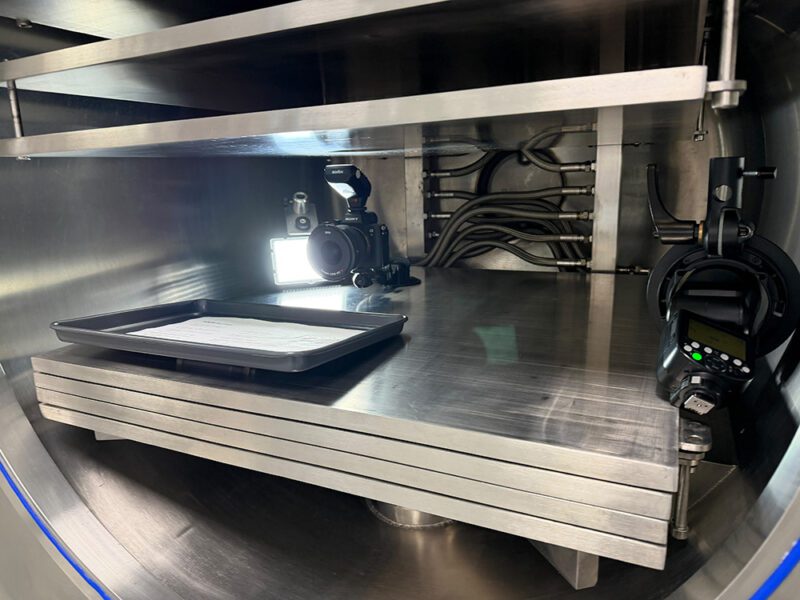
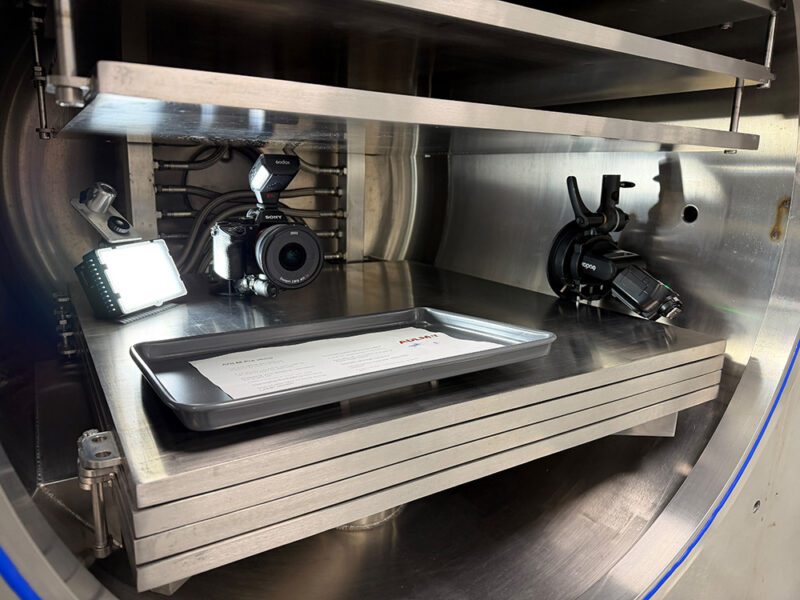
The lighting had two jobs. Inside the chamber, an off-camera flash picked out the texture of the beads and gave the steel interior some presence. Outside, I positioned a gelled accent light to add contrast and push some colour into a very mono tone environment. To control the wider lab, I chose a shutter speed and ISO combination that suffocated the ambient lab lighting, which killed the clutter of benches and equipment behind the scientist and put the attention back on the tray and the scientist's face. That solved the two-mood moodboard in a single move: one light doing the drama, one exposure decision doing the focus.
I couldn't see the frame from inside the chamber, so I used a wireless external monitor / iPad to shoot and review each shot. Images from iPad were then used to bring the marketing team into the process. They couldn't get to the shoot, so we ran creative decisions over WhatsApp instead, sending frames through as we worked so they could react in real time rather than waiting for a final selection days later.
On the freeze dryer itself, Biofortuna's Head of Tech prepped one chamber rather than all three, once we'd agreed the shot only needed enough shelf clearance to work from inside looking out. I shot two scientists through the same setup moving the person around the frame to give enough graphic layout options, giving Biofortuna a genuine choice for the final stand rather than a single take-it-or-leave-it option.
The finished stand runs the female scientist's shot as its centrepiece, the tray of beads filling the foreground and her face sharp behind it, the freeze dryer's chamber glowing around her. Biofortuna built the headline and supporting copy into a solid panel beside the photograph rather than over it with the supporting lines and the Biofortuna logo below. Keeping the panel separate from the photograph meant the designer never had to fight the face for space, and the image itself stayed exactly as shot, beads and scientist both intact and uninterrupted. This provided a bold, uncompromising image that carries Biofortuna's ambition and professionalism, adding true impact and a stop and turn moment for passers by.
Mark Simmons, Marketing Manager at Biofortuna, summed it up once he saw the images: "All done in the lens. I don't think we could have got that recreating it outside the dryer. Look at the depth, that's exactly what I wanted. The perspective is naturally interesting even if the viewer doesn't intuitively know why." When the finished stand came together, his reaction was shorter. He'd trusted an unusual approach on the strength of a brief conversation, and standing in front of the printed panel, he could see it had paid off.