
I recently spent a day at Catlow's Fuel Centre on the White Lund industrial estate in Morecambe, photographing for Flogas's "Local Legend" project, part of their wider "Grit Over Gloss" campaign. The brief was refreshingly specific: no stock-style setups, no polished poses. Flogas wanted a real image library of their dealer network, the actual people, yards and cylinders that keep the business running, shot as documentary rather than advertising. The images needed to work across dealer websites, social media, local campaigns and sales collateral, so versatility mattered as much as authenticity.
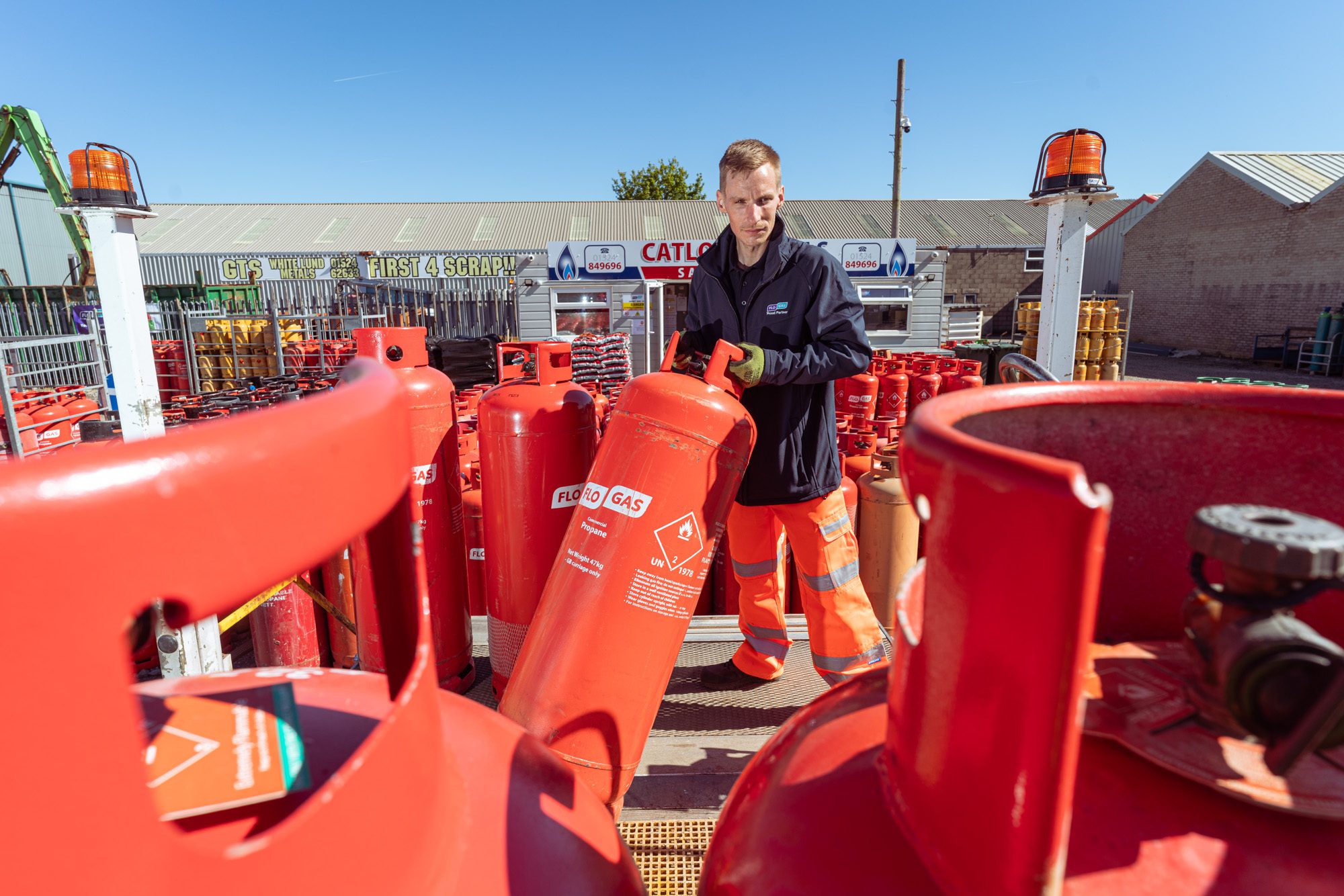
That meant working the way a photojournalist would. Team members mid-task, colleagues talking over a clipboard, hands on gloves and valves, vehicles moving through the yard. Cylinder stacks, site signage, branded jackets in use rather than laid out for a catalogue. The kind of imagery that has to feel credible and local, because it's going straight onto dealer websites and sales collateral where customers will recognise the yard down the road.
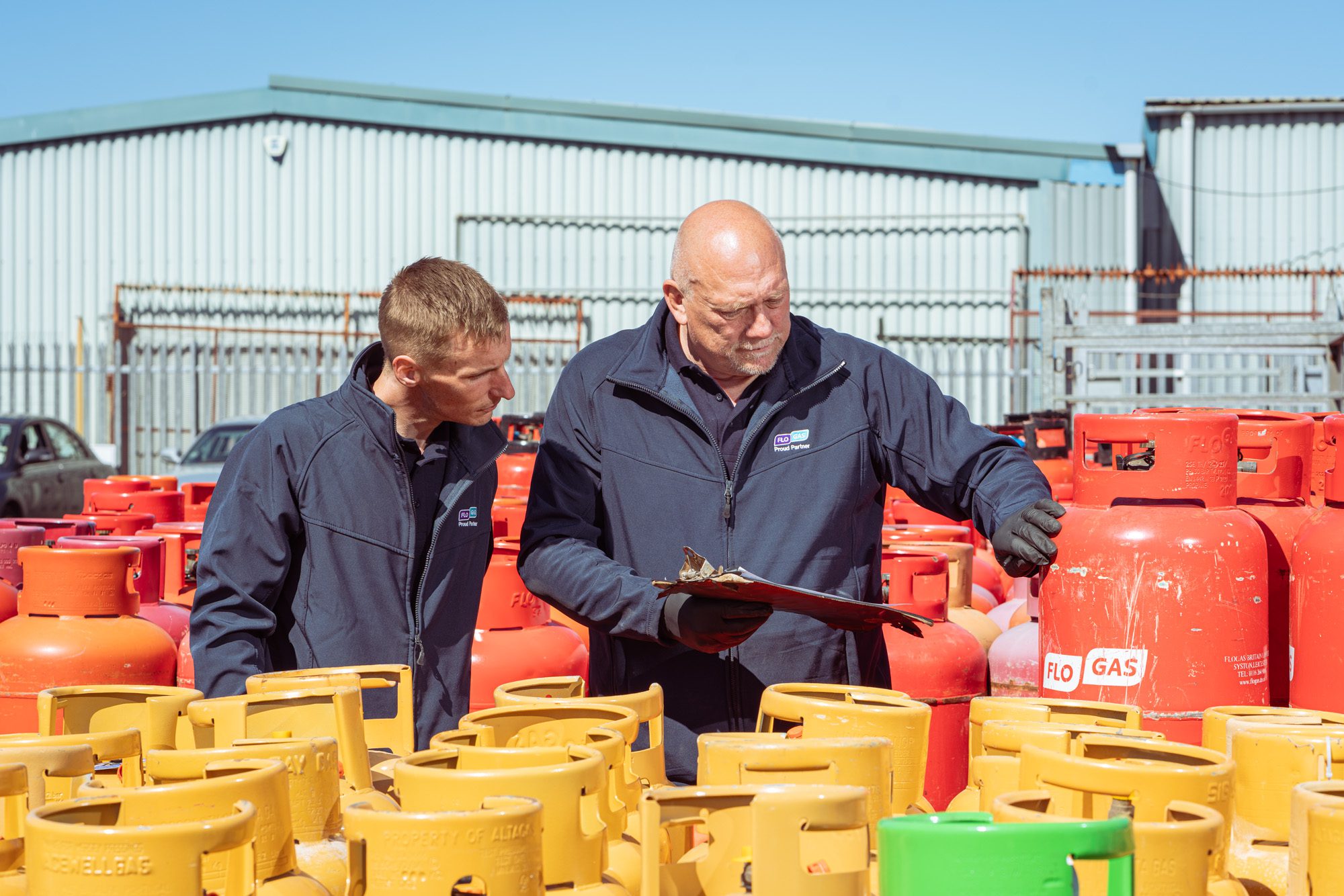
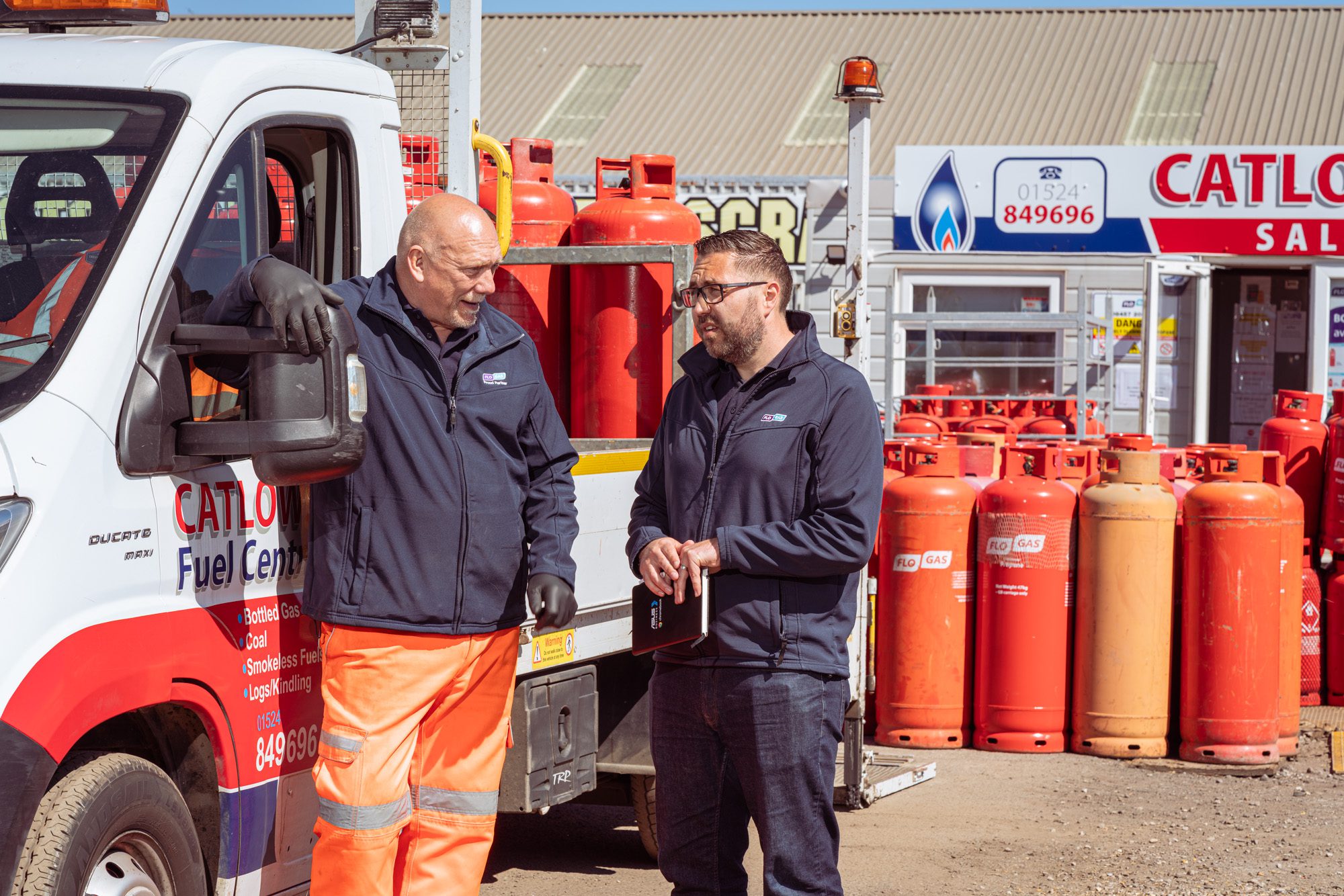
The weather had other plans. It was one of the harshest lighting days I've shot in a while, completely clear skies and a high sun that carved deep shadows under every peaked cap and blew the highlights off every red cylinder in the yard. Flat, contrasty conditions are hard enough on a posed studio shoot. On a moving, unscripted dealer yard, with people picking up cylinders and loading cars on their own schedule, there's no waiting for better light and no second take.
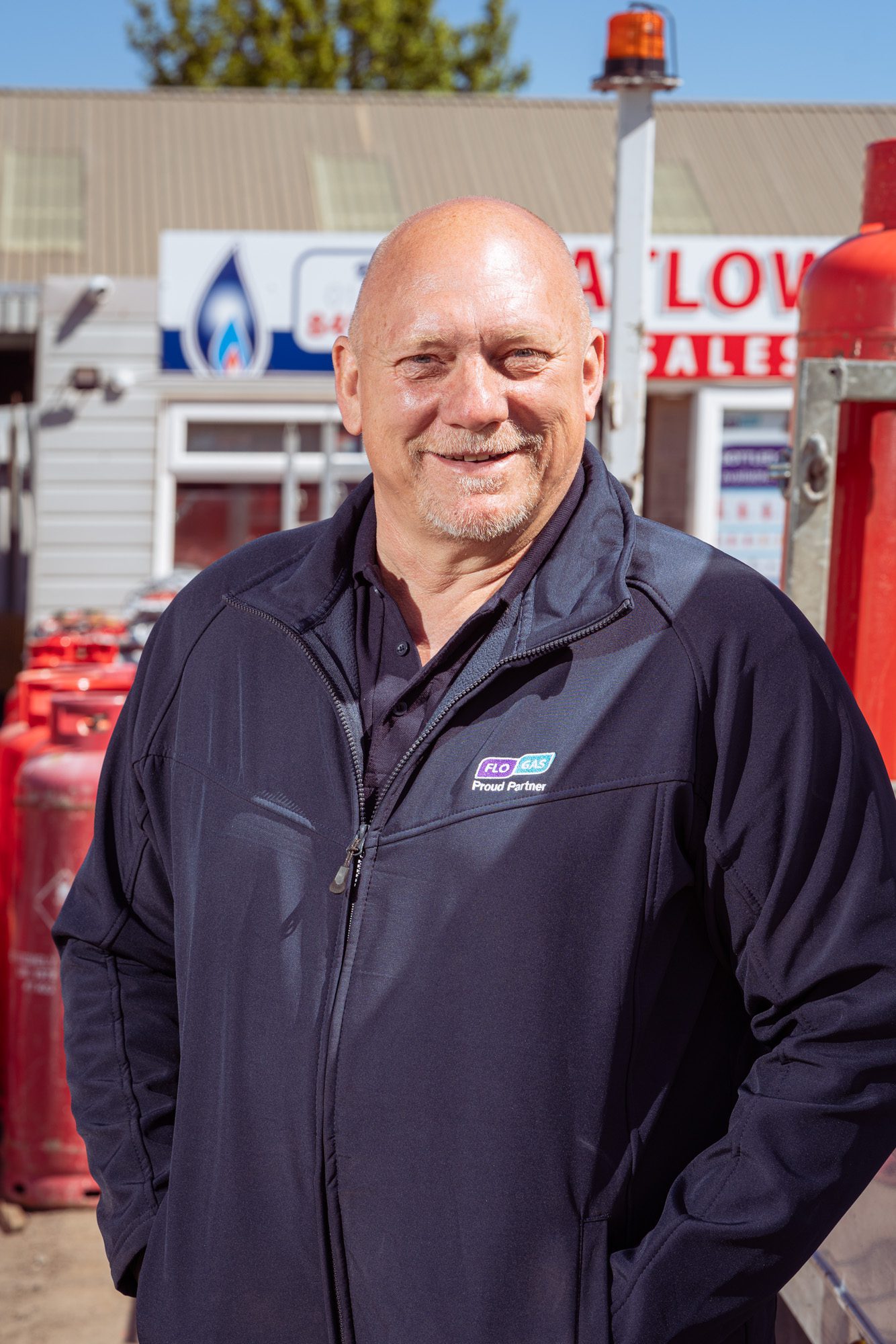
The fix was off-camera flash, used to lift shadow detail on faces and hands without flattening the scene or making it look staged. It's a balancing act. Enough fill to hold detail in the blacks, not so much that it fights the sun and starts looking artificial. Given the brief was built entirely around authenticity, that balance mattered more than usual, and it's the difference between a documentary image and one that just looks lit.
We came away with a strong library, more than 50 edited images covering people, yard, vehicles and close-up detail across landscape and portrait. Bekki, Flogas's Channel Marketing Manager, was pleased with the turnaround:
"Thanks for getting these over so quickly. They look really great! You also got so many."
There was one round of notes. A handful of the loading shots, photographed nearest midday, had picked up the harshest of the sun and felt a little washed out in places. Fair point. I took those back into post and pulled back the whites and highlights until the detail sat properly again.
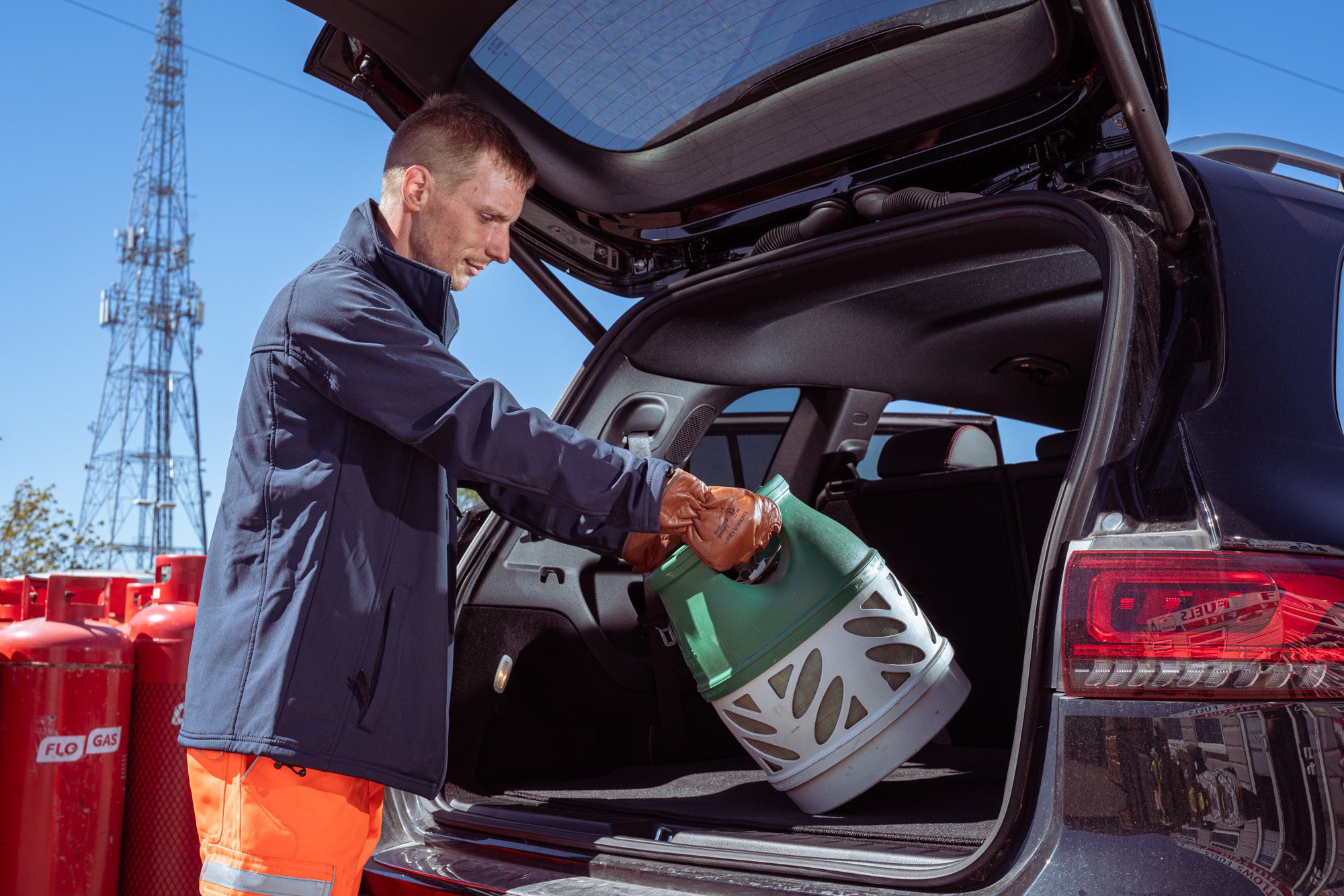
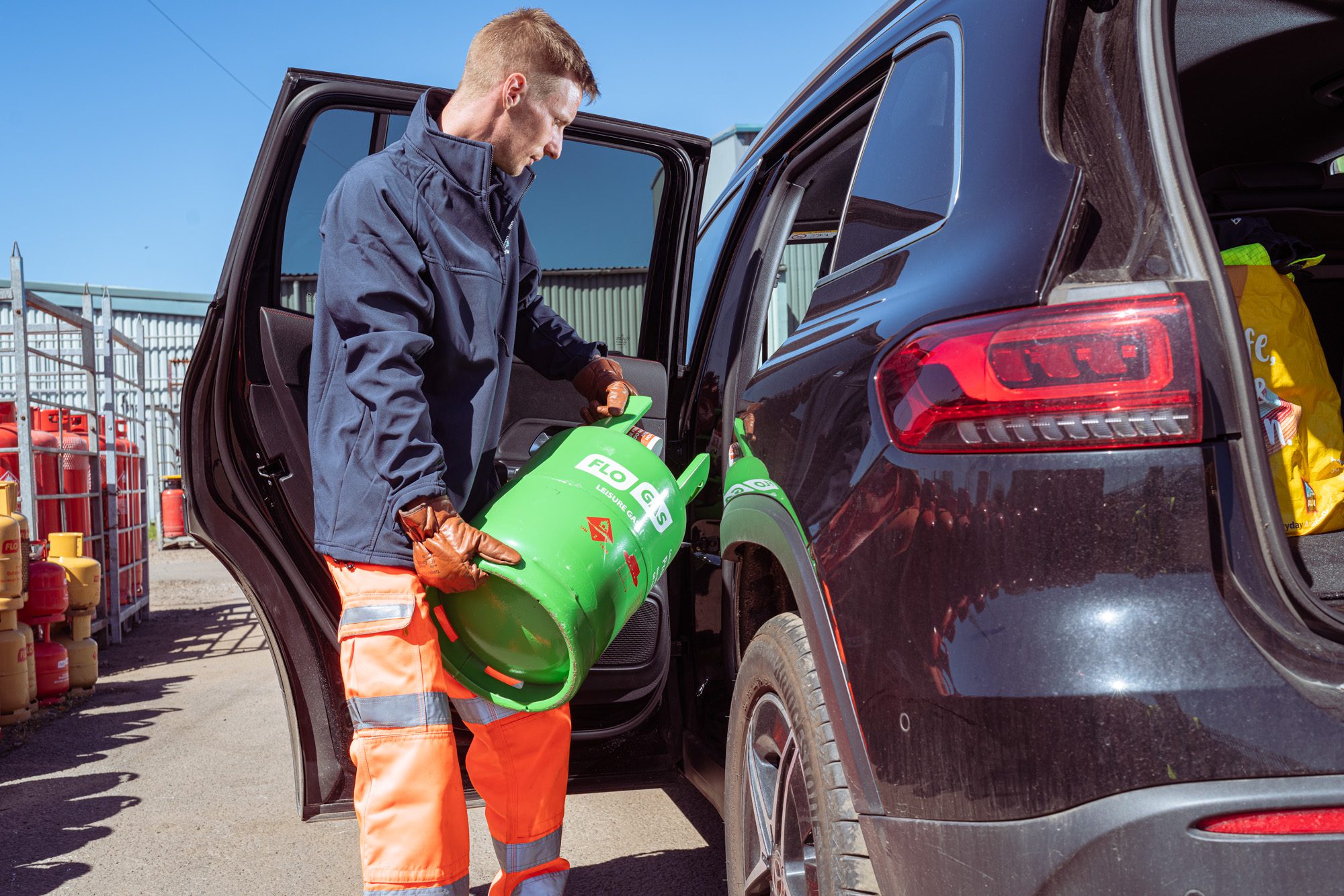
What I didn't do is clean up the cylinders. Part of the brief was keeping the grit: scuffed paint, weathered valves, the visible signs of daily use. Polishing that out would have undermined the whole point of the shoot, so the edit was about controlling the light, not manufacturing a showroom finish. Same with the sun flare on the metal. I reduced it where it was distracting, but left enough character that the cylinders still look like they've done a day's work.
Final word from Bekki:
"Amazing thanks for working on these. I have no other amend requests."
That's the outcome I want from every shoot: images the client can use straight away, and a process that survives a difficult lighting day without losing the honesty the brief asked for.
If you're planning a project that needs real people and real environments rather than stock polish, get in touch at office@gregharding.co.uk or +44 161 282 2229.