
SGS asked me back for another shoot, this time for laboratory photography and video inside a brand new building. The brief was familiar from our previous shoots together: capture technicians working in groups, natural rather than posed, confident and approachable in their day-to-day roles. What was new was the building itself, and the challenge that comes with it. Testing and certification is about as far from a naturally photogenic subject as you can get. My job was to find the story in it anyway, in both stills and video.
The centrepiece of the new lab is a large RF semi-anechoic chamber: a room lined floor to ceiling in cross-shaped foam absorbers, built to stop radio signals bouncing off the walls so equipment can be tested cleanly for wireless and electromagnetic compatibility. It looks nothing like a normal working environment, and that's exactly what made it worth capturing.
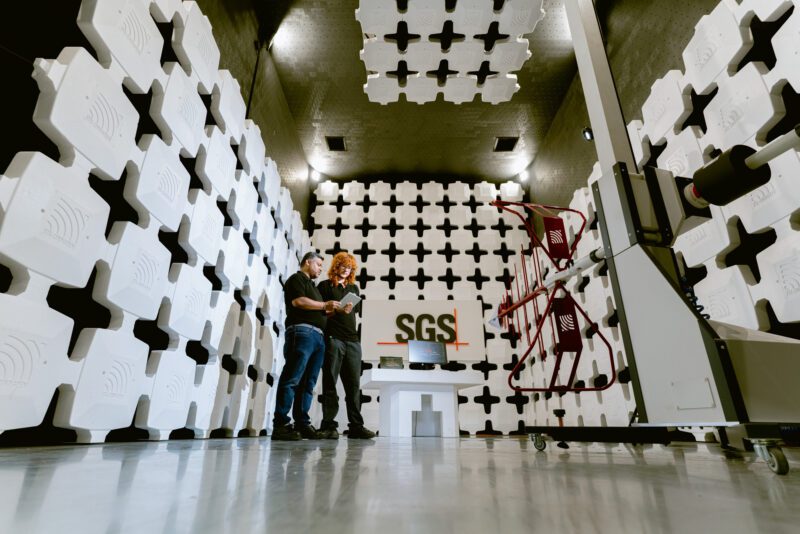
I kept the tablet in shot deliberately, as requested. It's a small prop, but it does real work in a photo like this: it turns "two people standing in a strange white room" into "two people actively doing their jobs."
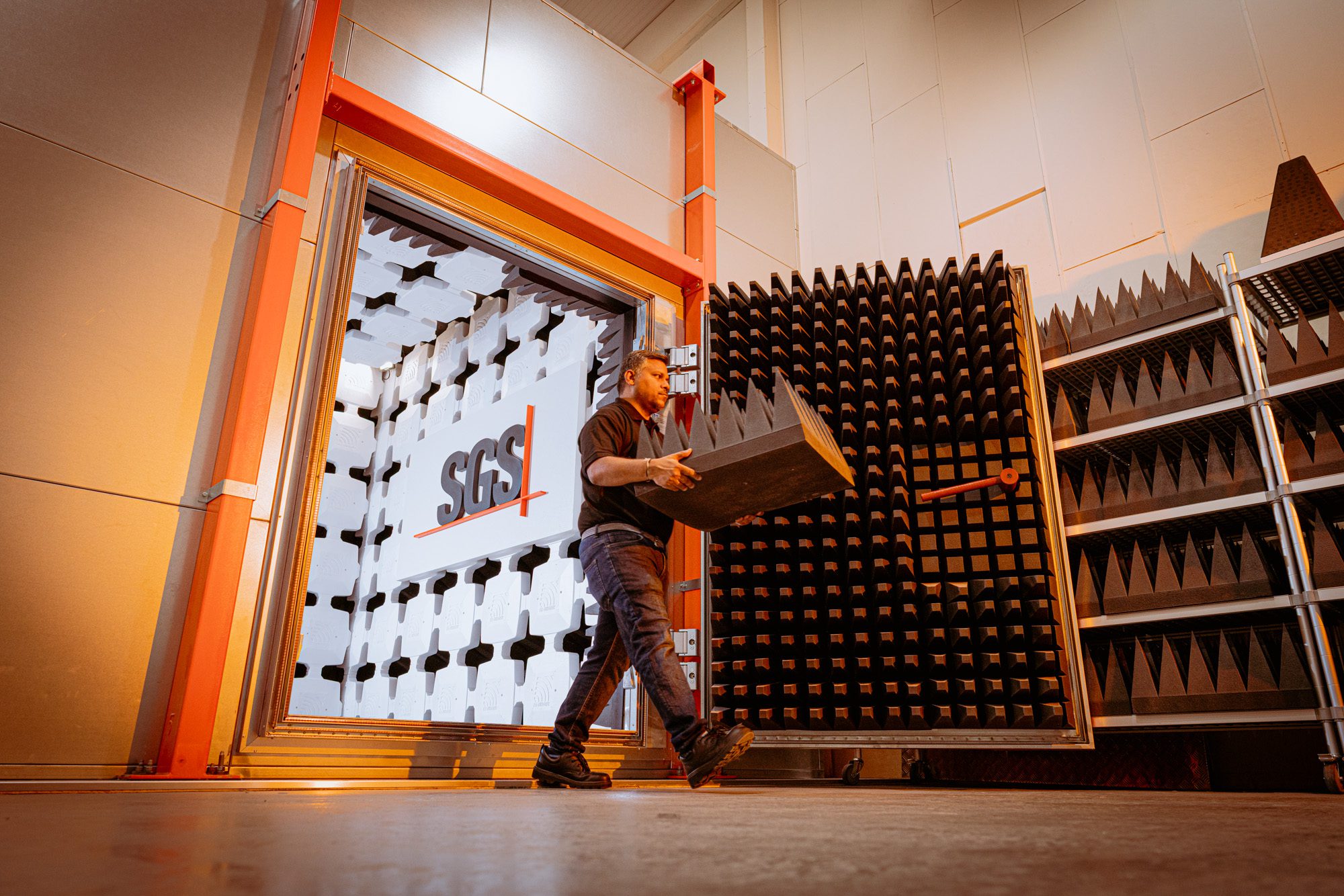
For a chamber like this, video does something stills can't. A photo shows the texture of the foam and the scale of the room, but it's the walk through the door with the absorber panel, captured as B-roll, that actually tells a viewer what these spaces are for and how they get built and maintained.
Not everything in the lab is exotic. Some of the most interesting photographs came from the most ordinary object in the building: a pushchair, clamped into a mechanical test rig and run through repeated stress cycles to check it holds up to years of real use.
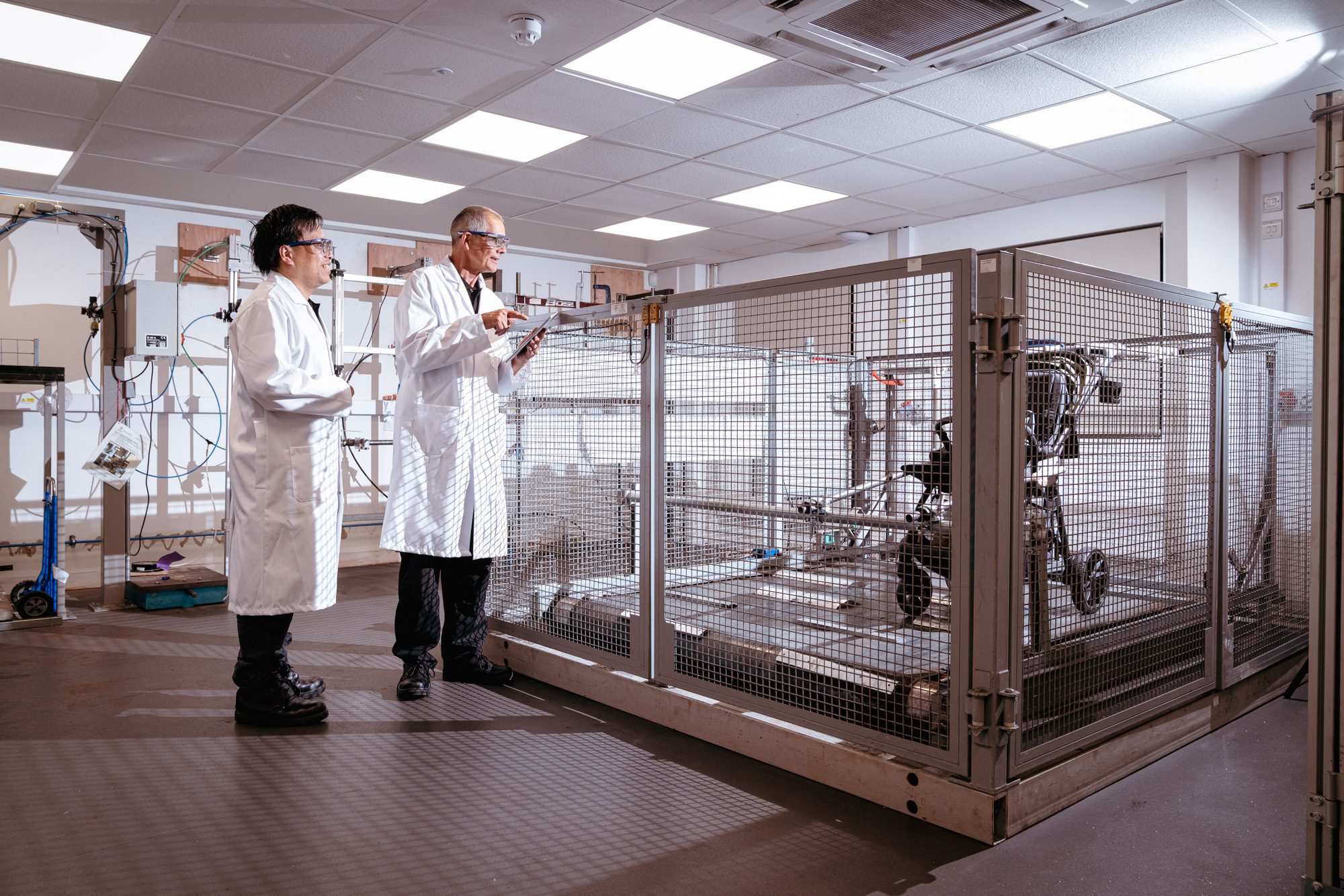
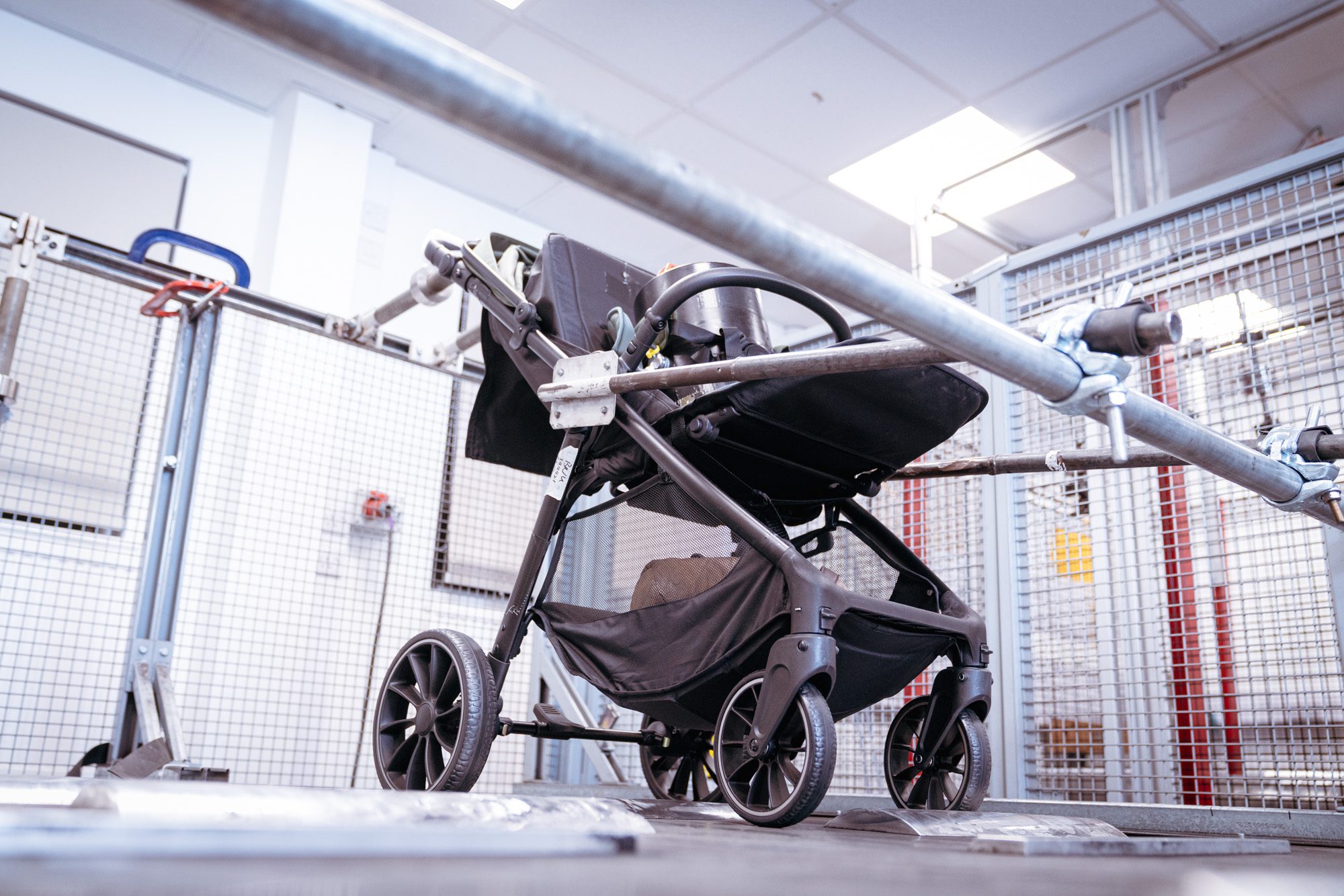
That contrast is the whole story of this shoot in one image: the same building that houses radio-frequency test chambers is also where a parent's everyday pushchair gets checked, cycle after cycle, before it's trusted to carry a child.
It's easy to think of compliance testing as a cost, a box to tick before a product ships. One shot from this session made the opposite case better than any stat sheet could.
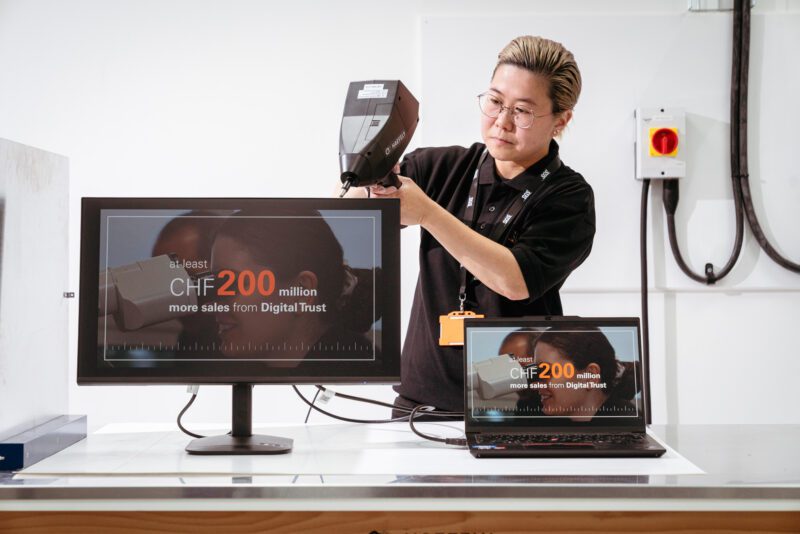
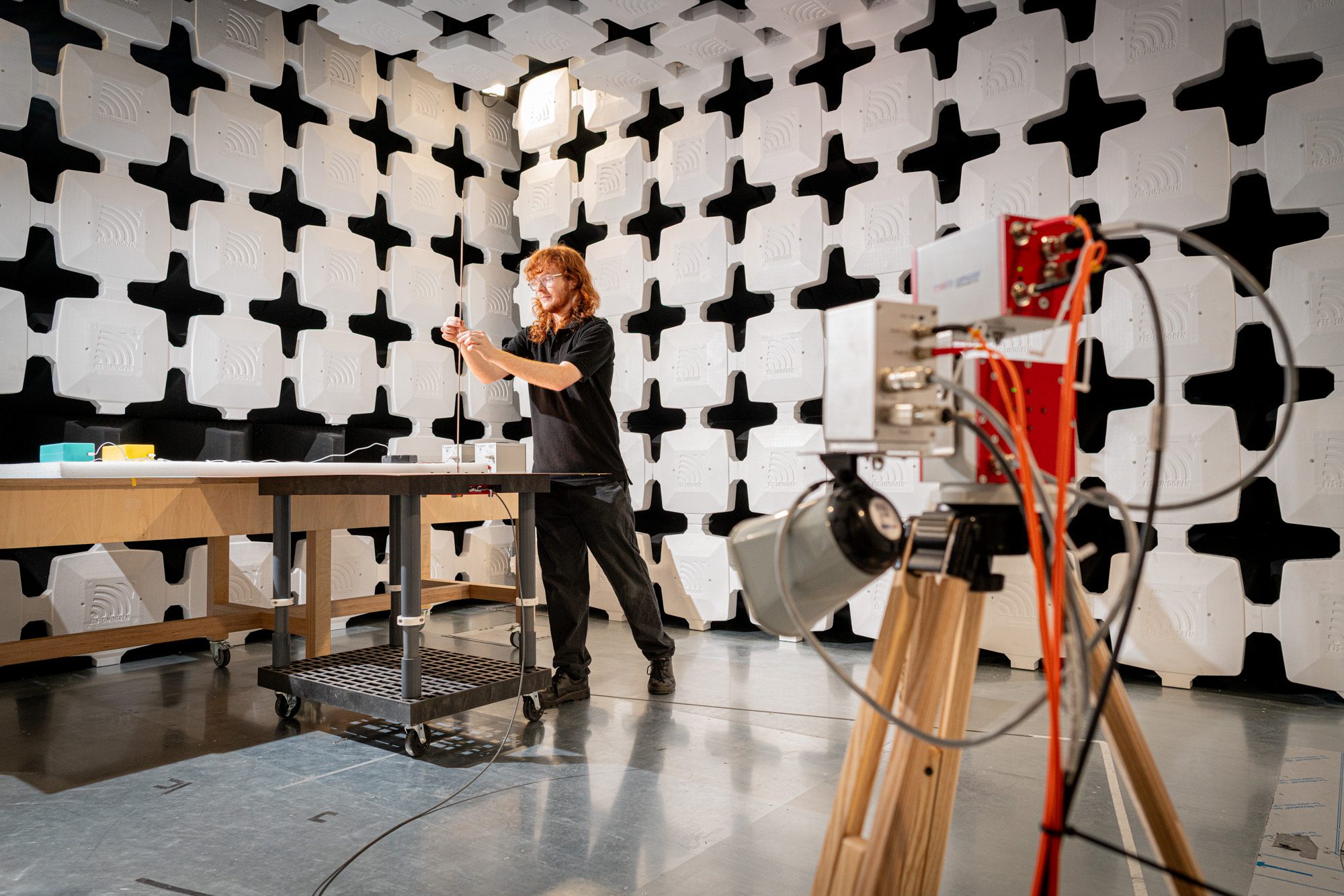
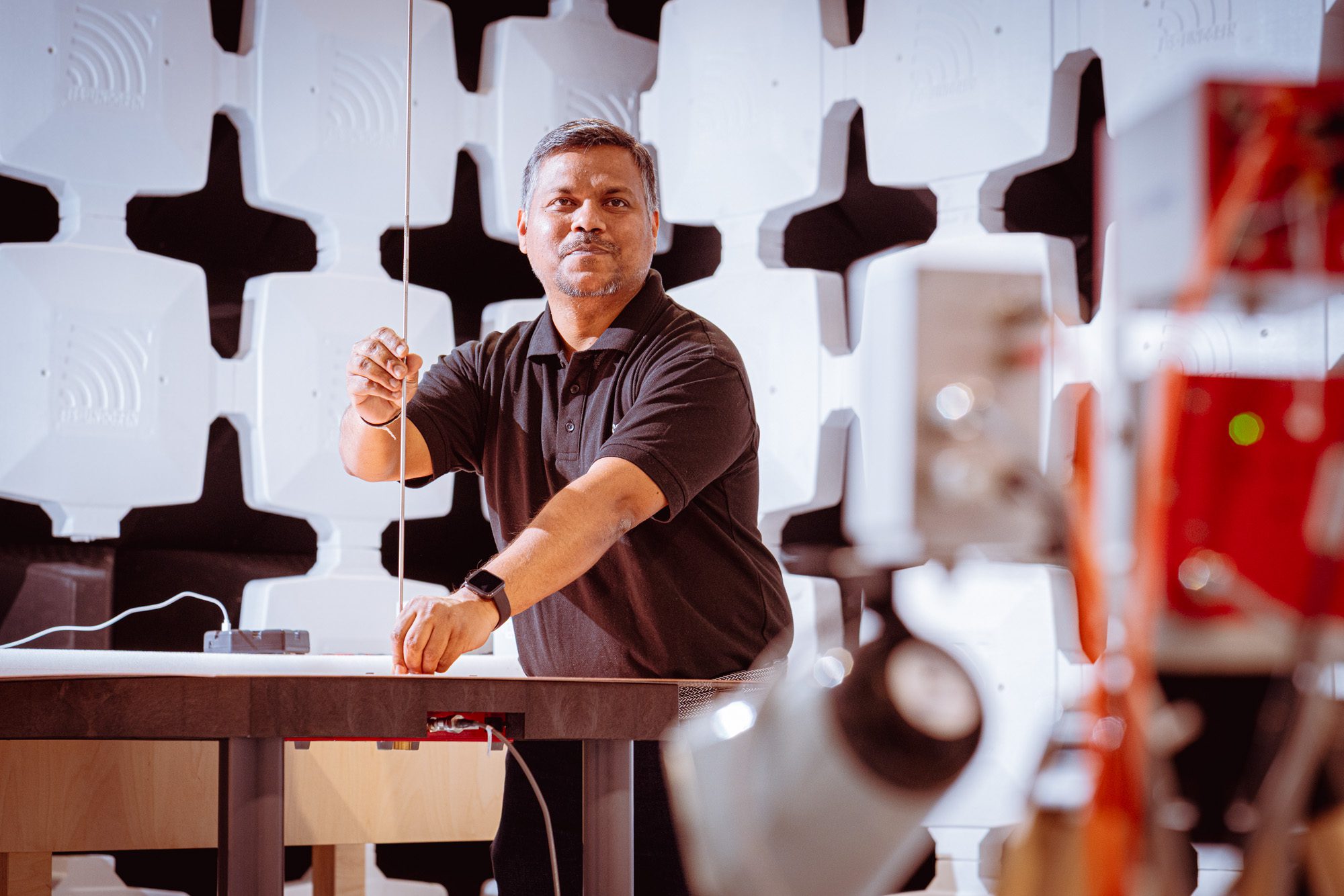
This is grounding and shielding resistance testing: confirming that a product's earthing and electrical shielding actually perform as they should, rather than just looking correct on a spec sheet. The end customer never sees this check. But it's the difference between a product that is safe and one that only looks it, and that's worth photographing properly.
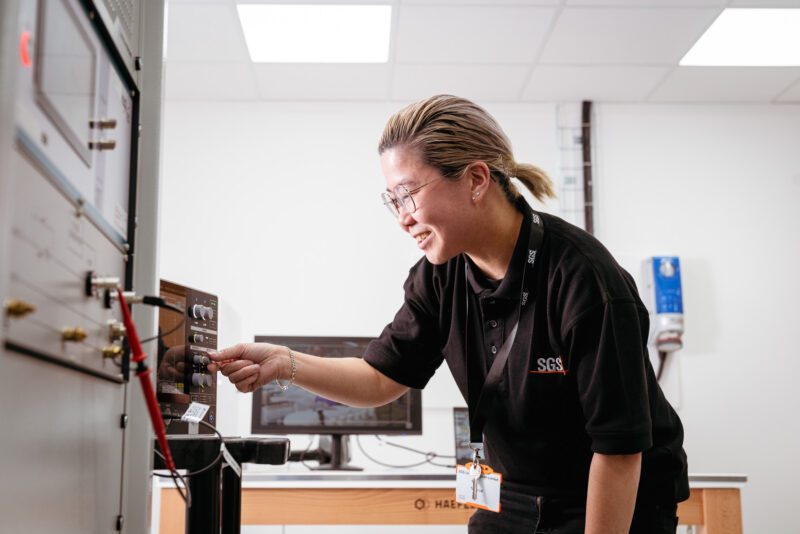
The brief asked for groups of colleagues working together rather than lined up for the camera. The easiest way to get that is to shoot people while something else is actually happening, so I spent time in a team meeting where a colleague was presenting on SGS's connectivity services.
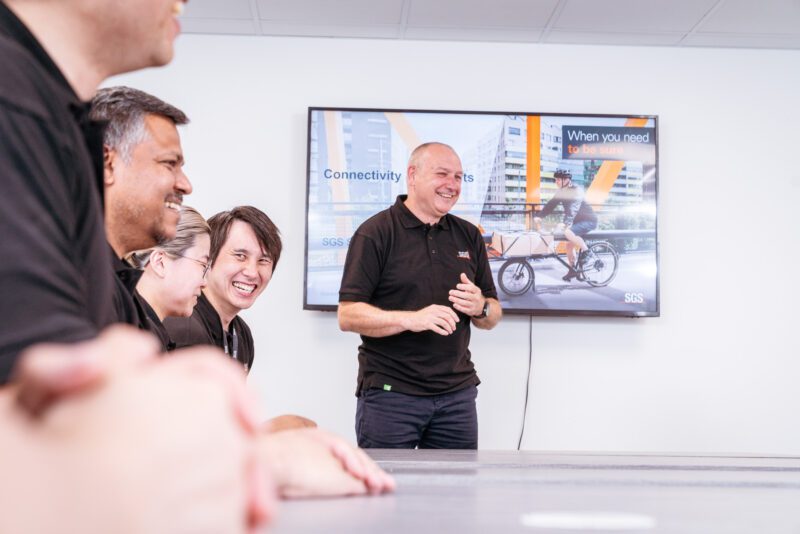
Genuine laughter reads very differently to a posed team photo, and it's usually only a minute or two away if you're patient and let a real meeting run rather than staging one.
Pulling back for a wider shot mattered too. It's one thing to describe a "new laboratory," and another to actually see how much space and infrastructure that involves.
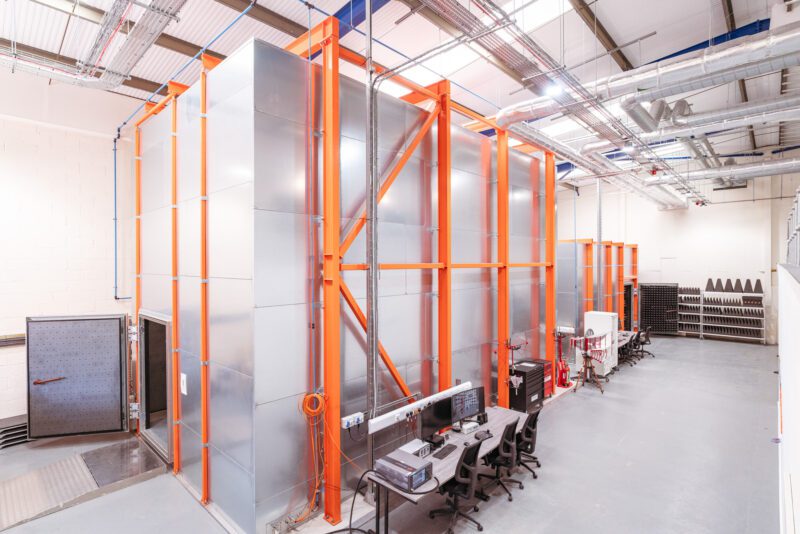
I shot this as a combined photography and video brief, gathering stills alongside B-roll throughout the day. For a space like this, the two do different jobs. A still photograph can hold on the detail of the absorber foam or the concentration on someone's face; footage of someone walking a panel into a chamber, or adjusting dials on a test rig, gives a sense of process and scale that a single frame can't. Delivering both from the same session means SGS has material that works for a web page, a service page hero image, and a short explainer video without a second shoot.
Testing and certification will probably never be an obviously exciting subject to photograph. But there's always a human story inside even the driest technical process, and that's usually the thing worth chasing. I trained as a Medical Illustrator and hold a BSc in Medical Illustration, so labs and technical spaces are familiar ground. If you run a scientific or industrial business and want photography and video that makes it make sense to people outside it, I'd love to talk about your project. Get in touch at office@gregharding.co.uk or +44 161 282 2229.